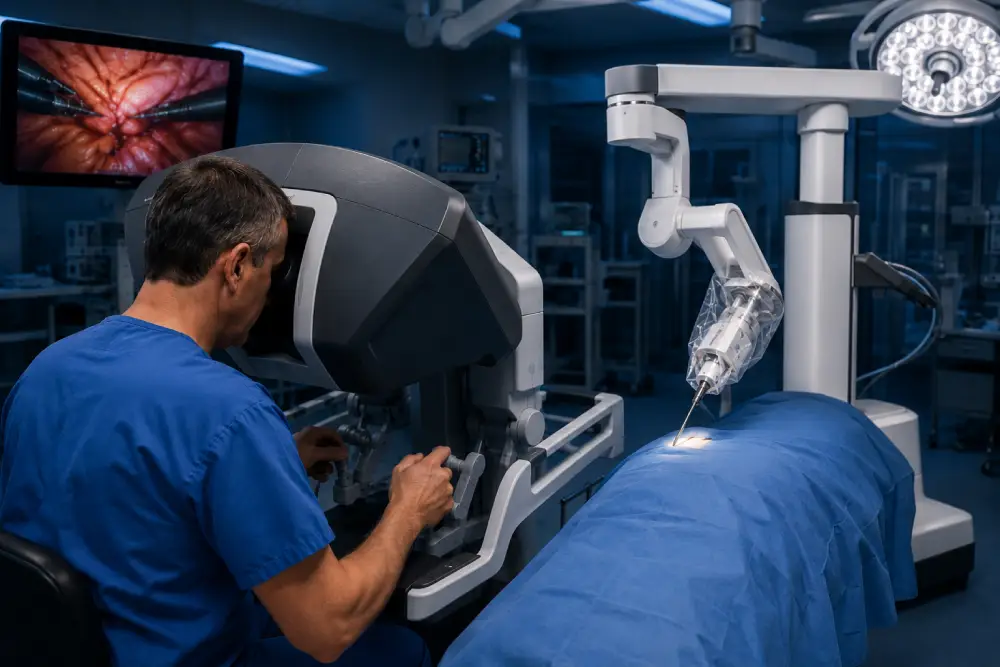
Liver cancer remains one of the most significant challenges in oncology, primarily because it is frequently diagnosed at advanced stages when curative options are limited. For patients facing a diagnosis of Hepatocellular Carcinoma (HCC) or other liver malignancies, understanding the landscape of available treatments is crucial for making informed care decisions. While traditional methods like …

Innovative Liver Cancer Treatment: What is TheraSphere?
Post by Florence Web and Editorial Board
Created at January 27, 2026
Updated at January 27, 2026
Liver cancer remains one of the most significant challenges in oncology, primarily because it is frequently diagnosed at advanced stages when curative options are limited. For patients facing a diagnosis of Hepatocellular Carcinoma (HCC) or other liver malignancies, understanding the landscape of available treatments is crucial for making informed care decisions. While traditional methods like surgery and chemotherapy serve as the backbone of treatment, innovative localized therapies like TheraSphere are providing new hope for patients who require more targeted, minimally invasive alternatives.
This guide explores the mechanics of TheraSphere, its role within Selective Internal Radiation Therapy (SIRT), and why it represents a transformative shift in personalized liver cancer management.
1. The Challenge of Liver Cancer and Traditional Treatment Barriers
The liver is a vital organ responsible for essential functions including digestion, metabolism, and detoxification. Because it plays such a central role in overall health, malignancies within the organ are particularly life-threatening.
The Hurdle of Late Diagnosis
One of the primary difficulties in treating liver cancer is its asymptomatic nature in the early stages. Most patients do not experience noticeable symptoms until the disease has progressed, often leading to a diagnosis at a more advanced phase. This late-stage discovery often limits the effectiveness of “standard” treatments.
Limitations of Standard Care
Traditionally, liver cancer has been managed through several primary modalities, each with its own set of constraints:
- Surgical Resection and Transplantation: These are effective for some patients, particularly when the tumor is small and confined to a treatable region. However, factors such as tumor size, number, location, or the patient’s underlying health often make surgery impossible.
- Chemotherapy: While these drugs aim to destroy cancer cells, they are systemic treatments that can affect healthy cells throughout the body, resulting in significant side effects.
- External Radiation Therapy: Although this targets the tumor, it often damages the surrounding healthy liver tissue because the radiation must pass through the body to reach the organ.
These limitations have created an urgent need for therapies that are both highly targeted and less harmful to the patient’s overall well-being.
2. What is TheraSphere Therapy?
TheraSphere is an advanced internal radiation therapy specifically designed to address the unique blood supply of liver tumors. It is classified as a type of Selective Internal Radiation Therapy (SIRT).
The “Internal” Advantage
Unlike external radiation, TheraSphere delivers a high dose of radiation directly inside the tumor from within the body. This approach is especially valuable for patients with hepatocellular carcinoma (HCC) who may not be candidates for surgery or who have not responded well to systemic chemotherapy.
The Role of Yttrium-90 (Y-90)
The procedure involves the infusion of millions of microscopic glass beads, known as Yttrium-90 (Y-90) microspheres, into the hepatic artery. This artery is the primary blood vessel that supplies nutrients and oxygen to liver tumors. By utilizing this specific pathway, TheraSphere ensures that the radiation is delivered exactly where it is needed most.
3. How TheraSphere Works: Precision at the Microscopic Level
The effectiveness of TheraSphere lies in its ability to exploit the biological characteristics of liver tumors to deliver a “smart” radiation treatment.
- Vascular Targeting: Liver tumors derive the vast majority of their blood supply from the hepatic artery, while healthy liver tissue is primarily supplied by the portal vein. TheraSphere takes advantage of this by infusing the Y-90 microspheres into the hepatic artery.
- Localized Radiation: Once infused, these millions of microscopic glass beads travel through the small blood vessels of the tumor and become trapped there.
- Maximum Impact, Minimum Damage: Because the beads are lodged directly within the tumor’s vascular network, they emit radiation over a very short distance. This allows for a concentrated dose that destroys cancer cells while minimizing exposure and damage to the surrounding healthy liver tissue.
This targeted approach offers a more personalized care option for individuals with advanced disease, providing hope where traditional therapies may have failed.
4. Who Can Benefit from TheraSphere?
TheraSphere is not just an alternative; for many, it is a primary solution when other paths are closed. It is particularly beneficial for:
- Patients with Inoperable Tumors: Those whose tumor size or location makes surgical removal or transplantation too risky.
- Non-Responders: Individuals who have undergone traditional chemotherapy or external radiation without significant success.
- Advanced HCC Cases: Patients with hepatocellular carcinoma who require a treatment that can stabilize or shrink tumors as a “bridge” to future surgery or to improve overall quality of life.
5. Potential Advantages and Outcomes
The primary goal of TheraSphere is to provide an effective treatment that enhances the patient’s quality of life through comprehensive, targeted support.
- Minimally Invasive: Because it is an internal infusion rather than an open surgery, the procedure is generally less taxing on the patient’s body.
- High Precision: By blocking specific pathways and delivering radiation directly to the site, it offers a more “surgical” level of precision without the need for large incisions.
- Personalized Care: Treatment is tailored to the specific vascular anatomy of the patient’s tumor, ensuring the most effective delivery possible.
6. Summary of Key Takeaways
Feature | TheraSphere (SIRT) |
Primary Target | Hepatocellular Carcinoma (HCC) and liver tumors |
Mechanism | Millions of microscopic Yttrium-90 glass beads |
Delivery Method | Infusion into the hepatic artery |
Main Benefit | Direct tumor radiation with minimal damage to healthy tissue |
Ideal For | Patients unsuitable for surgery or non-responsive to chemo |
Conclusion
TheraSphere represents a significant leap forward in the treatment of liver cancer. By combining advanced technology with a deep understanding of liver anatomy, it provides a powerful, targeted alternative to traditional treatments. For those facing the complexities of a liver cancer diagnosis, TheraSphere offers a more precise and personalized pathway toward managing the disease and improving long-term outcomes.
Disclaimer: This summary is for informational purposes only and does not constitute medical advice. Patients should consult with their oncology team to determine if TheraSphere is the right option for their specific condition.